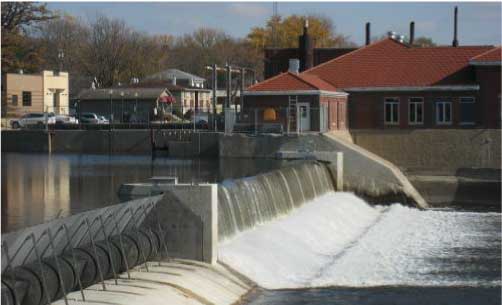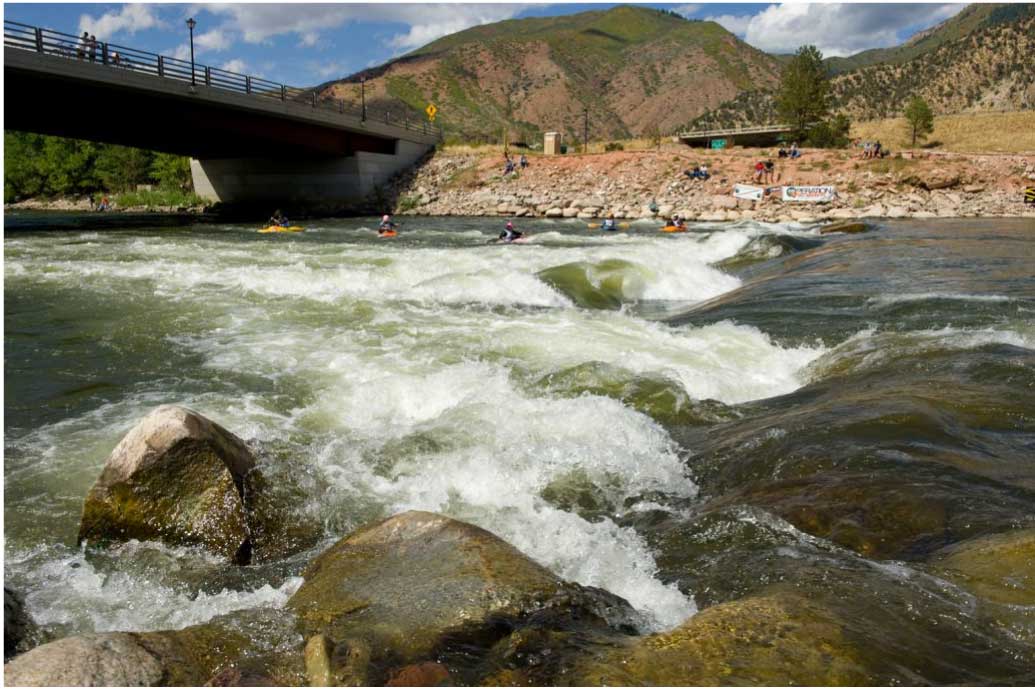

The project seeks to improve fishing opportunities throughout the reach by enhancing the current channel and replacing the uniform velocities and depths created by the low-head dams with diverse rocks, boulders, and grading. The angler will be able to experience and explore a mosaic of complex and diverse habitat types. The diversity in depths and velocities will more closely resemble a natural river and the fish will have access to a wide range of habitat types throughout the Lower Reach which are not currently available. This will provide anglers with an opportunity to take advantage of a larger area that possess more-diverse conditions and target fish in the pools, runs, glides, and riffles created by the Project.
Fish passage has also been a primary design goal of the project. The project underwent an extensive iterative design process to improve fish passage within the Lower Reach. The City and GRWW has worked closely with MDNR Fisheries Division to alter the design to enhance fish passage along the channel margins, provide bulk passage for migrating fish, and reduce flow velocities, when compared to the existing conditions, as much as possible. During this iterative process, many design changes were made that included the removal of previously proposed recreational wave features, more gradual grading of riffle slopes to provide better fish passage hydraulics and mussel habitat areas, and incorporating over 125 scattered habitat boulders. To inform the design and to maximize fish movement and passage throughout the reach, a sophisticated 2-D hydraulic model was developed to analyze water velocities, depths, and fish swim paths.
Because of the complexity of a construction project of this magnitude, there will be short term impacts to fishing during the construction. These temporary impacts are not anticipated to have lasting negative consequences to the existing fish populations.