
Skip to content

Steelhead Holding Zones

Steelhead holding position

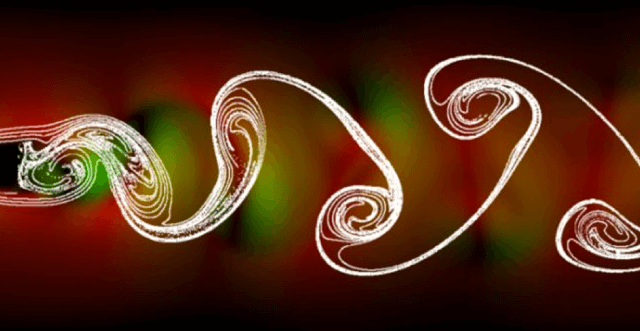
Fish swimming in front of a structure display lower tail-beat amplitudes and body wave speeds, implying that the bow wake may be the most energetically favorable region for a fish to hold position near a large rock.

A sandy bottom, like the one in the first diagram, causes very little disturbance to the flow of water and has a very shallow zone above it. Steelhead will move over an area like this, but there is no incentive for them to hold here for an extended period of time, since they would have to exert energy to stay here.

Sandy Bottom

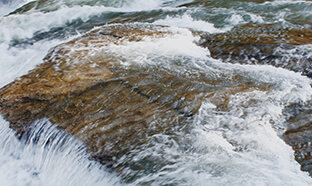
A bottom made up of rocks, however, creates more disturbance in the water and results in a much wider zone of reduced current along the bottom. The bigger the rocks, the deeper this area of turbulence will be along the river bottom.

Rocky Bottom


https://www.youtube.com/watch?v=d68FXr9oF-Y
Project: Upper Reach

Area: Ann Street to Leonard Street

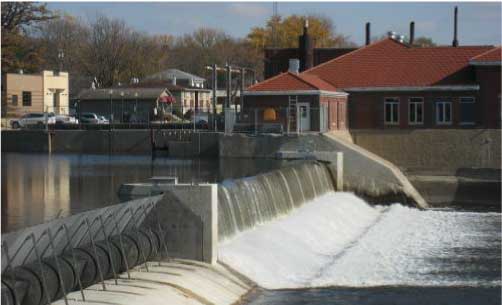
To protect the Grand River from invasive species, a new barrier will be installed. The Great Lakes Fishery Commission is leading the review of several options and locations, including an Adjustable Hydraulic Structure (which would look similar to this construction in Iowa).
Ann Street to Leonard Street

Reveal a Portion of the Limestone Bedrock

Project: Upper Reach

Area: Leonard Street to Sixth Street Dam

Removing the Sixth Street dam will expose a portion of the limestone bedrock that is currently submerged.
Leonard Street to Sixth Street Dam

Remove Aging Dams

Project: Upper and Lower Reach

Area: Sixth Street Dam to Pearl Street

Remove four low-head dams (Lower Reach). Remove Sixth Street dam (Upper Reach) after new lamprey barrier is complete.

Sixth Street Dam to Pearl Street

Project: Lower Reach

Area: Michigan Street to Fulton Street

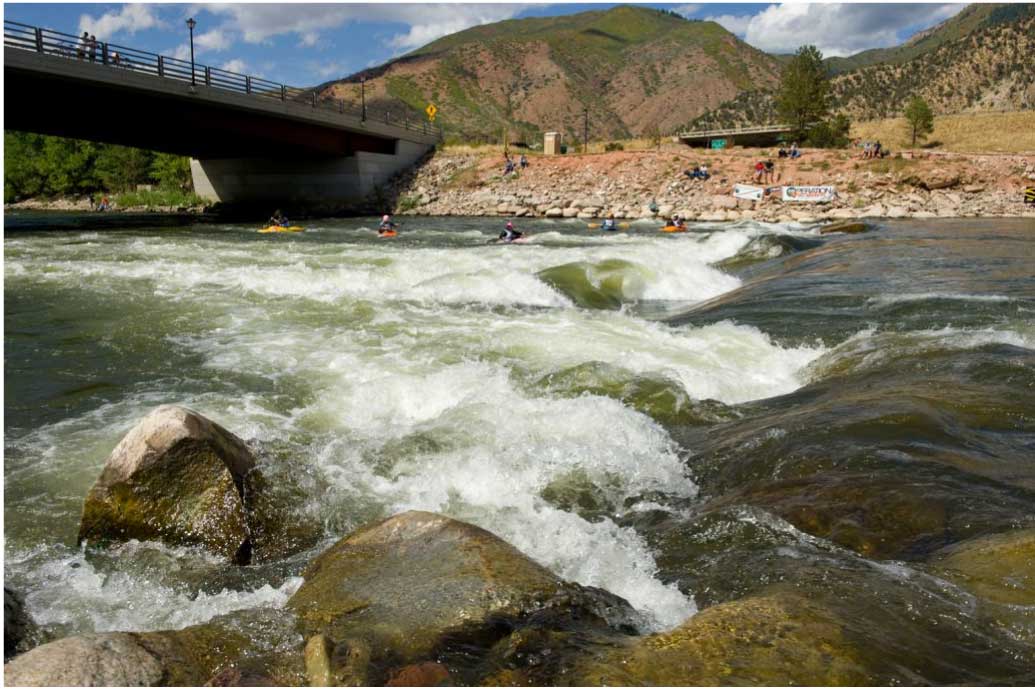
Install rocks and boulders to create new wave and riffle features.

Play Video